November 2026 Enterprise API Releases
1794423382310
October was a big month. We launched the HeyGen Platform, a new home for building with HeyGen models, and shipped new versions of HeyGen Video 1 and HeyGen Voice 1. Here's what's new and how to get started.
HeyGen Developer Platform
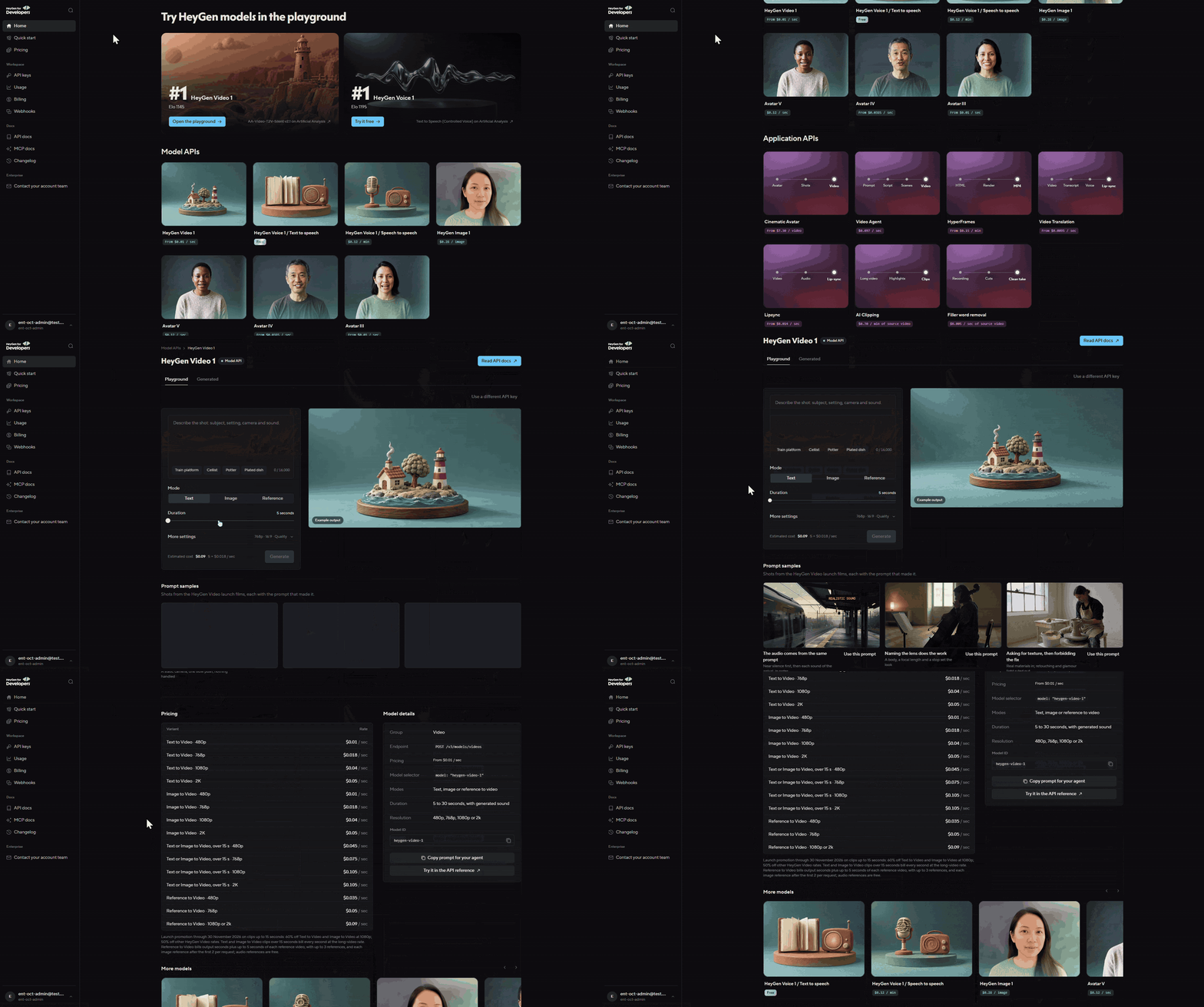
platform.heygen.com is one place to explore, test and ship with HeyGen models.
Model catalog
Every HeyGen model in one place, with capabilities, examples and per-model pricing.
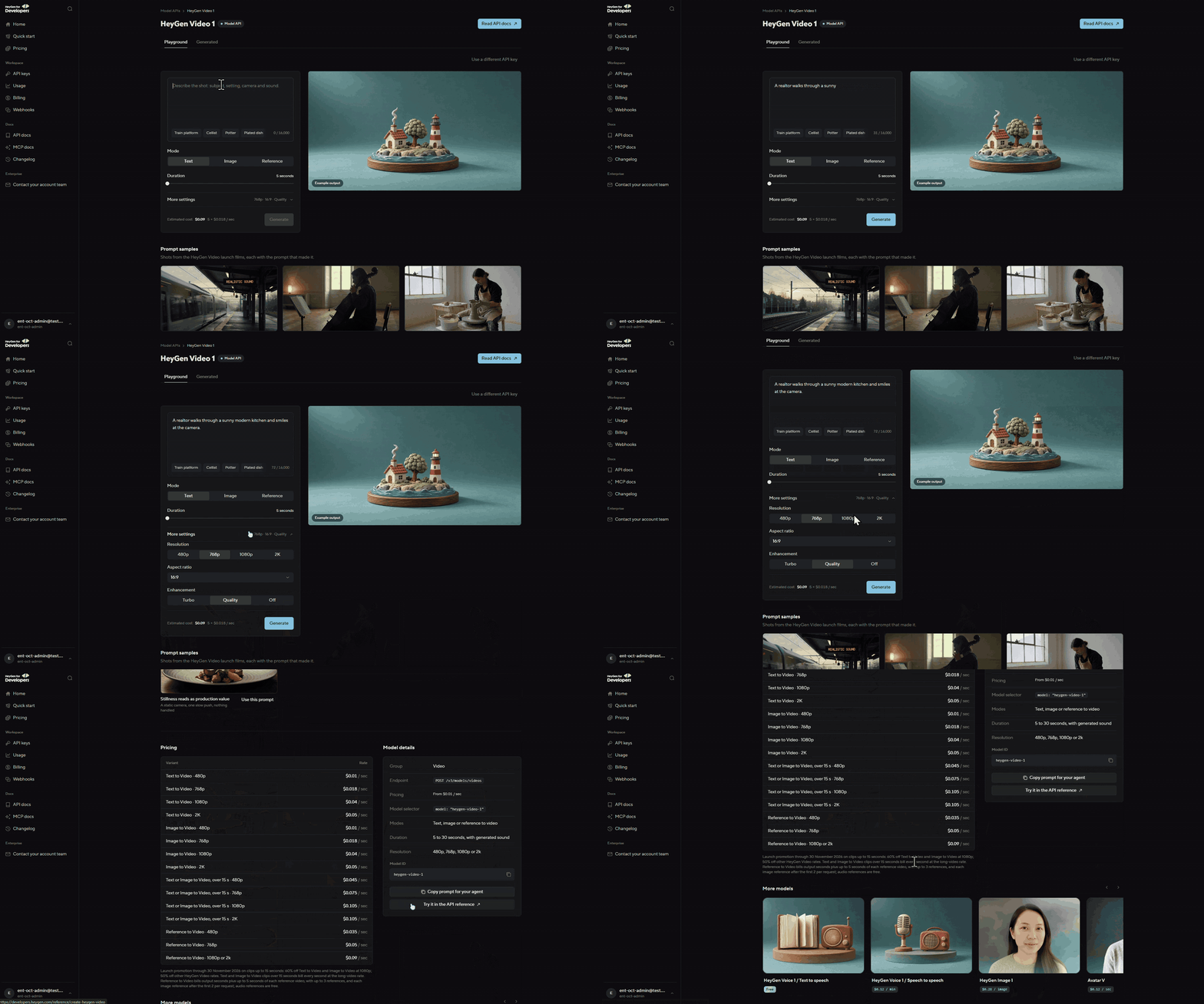
Playgrounds
Try HeyGen Video, Voice, Image and avatar models in the browser.
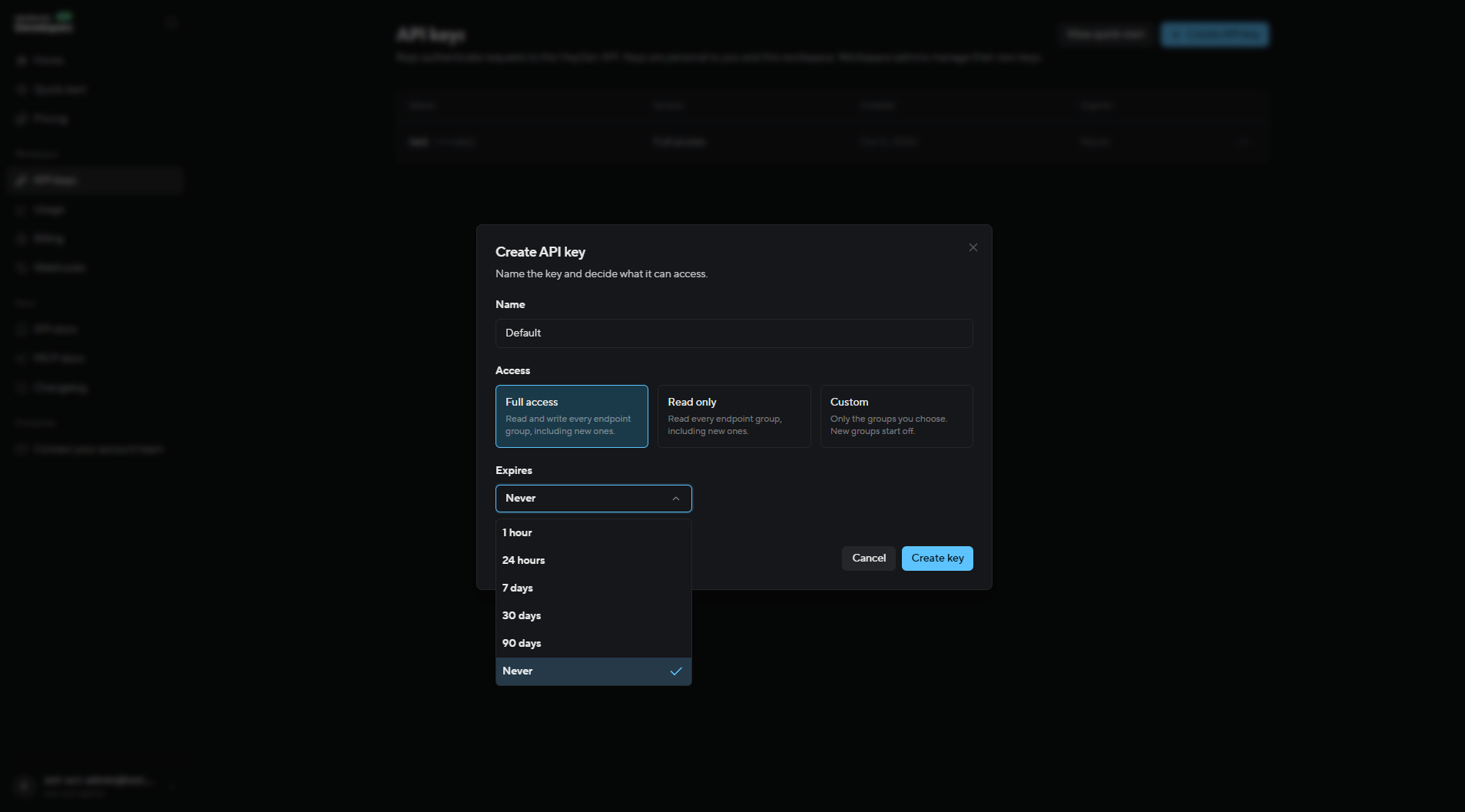
API keys
Create keys with full, read-only or custom access, set expiry dates, and rotate them.
New Models on the API
HeyGen Video 1
Our video model, and the No. 1 video model on OpenRouter by usage.
Text to video, image to video and reference to video, with generated dialogue, ambience and sound effects in every clip
Clips from 5 to 30 seconds, or set
durationtoautoand let the model pick the length from your dialogueOutput in 480p, 768p (default), 1080p and 2K
Reference to video: up to three reference videos share 15 seconds of input, and
input_video_durationshows what was used and billed
Learn more: Get started
HeyGen Voice 1
Ranked No. 1 on the Artificial Analysis Text to Speech leaderboard.
Instant Clone: clone a voice from one recording, usually ready in seconds, free during the preview. Add an
imageand the voice takes on the ambience of its background. GuideTurbo (
heygen-voice-1-turbo): lower-latency speech with instant voices, as one file or streamed. Turbo Free is free until November 30, 2026.Speech to speech: send up to 300 seconds of audio and get the same words and timing back in one of your instant voices.
Learn more: Guide
HeyGen Image 1
Portraits that keep a person's identity from 1 to 5 photos and follow a reference image's clothing, pose and background.
Learn more: Try it
Note: These models are also available through Creative Studio on web, MCP, CLI, and the iOS app
Higher rate limits for Enterprise
Per endpoint:
Reads: 1,000/min (was 300)
Writes: 30/sec (was 10)
Heavy: 120/min (was 30)
Status polling: 1,500/min (was 500)
Learn more: Details
IPA pronunciations in brand glossaries
Add an ipa transcription to any glossary term, such as /kiːˈtruː.də/ for Keytruda, to set its exact sounds and stress. This works well for drug names, personal names and terms a respelling can’t capture. If you send IPA alone, HeyGen writes the respelling for you so every voice can say the term. IPA can also be set for a single language.
Learn more: Guide
More natural blinking for Avatar V
Avatar V can blink more often and more naturally. Set "more_blinking": true in engine on POST /v3/videos.
Learn more: Guide
Zero Data Retention, across HeyGen
Zero Data Retention (ZDR) now covers almost everything your team makes in HeyGen. With ZDR on, HeyGen permanently deletes your content after the retention window you choose.
Wider coverage. AI Studio and Video Agent videos, Video Translate and proofreads, voice generation and voice changes, images, uploads, podcasts, AI clips, cinematic avatar videos, HyperFrames renders and custom agents, in the web app and through the API.
Your window. Anywhere from 10 minutes to 100 days.
Sub-workspaces. Each sub-workspace can have its own ZDR setting, separate from its parent.
Contact your account team to turn on ZDR or change your settings.
Learn more: HeyGen Compliance: SOC 2, HIPAA, GDPR & Zero Data Retention
Retiring
API v1 and v2 will be retired on November 7, 2026
After that date, v1 and v2 endpoints will no longer be available, so route all traffic to v3 before then.
How to find what still needs to move
Every v1 and v2 response now includes a warning object that names its v3 replacement. Log warning.v3_endpoint to build a list of the calls you still need to migrate.
What else changes in v3
Every list endpoint uses cursor-based pagination.
Images, video and audio inputs accept a
url, anasset_idorbase64.Webhooks are managed endpoints with signed payloads; manage them at
/v3/webhooks/endpoints
Learn more: See the full endpoint mapping
Did you like this update?


Leave your name and email so that we can reply to you (both fields are optional):
